Sliding Capo
KeyGlide


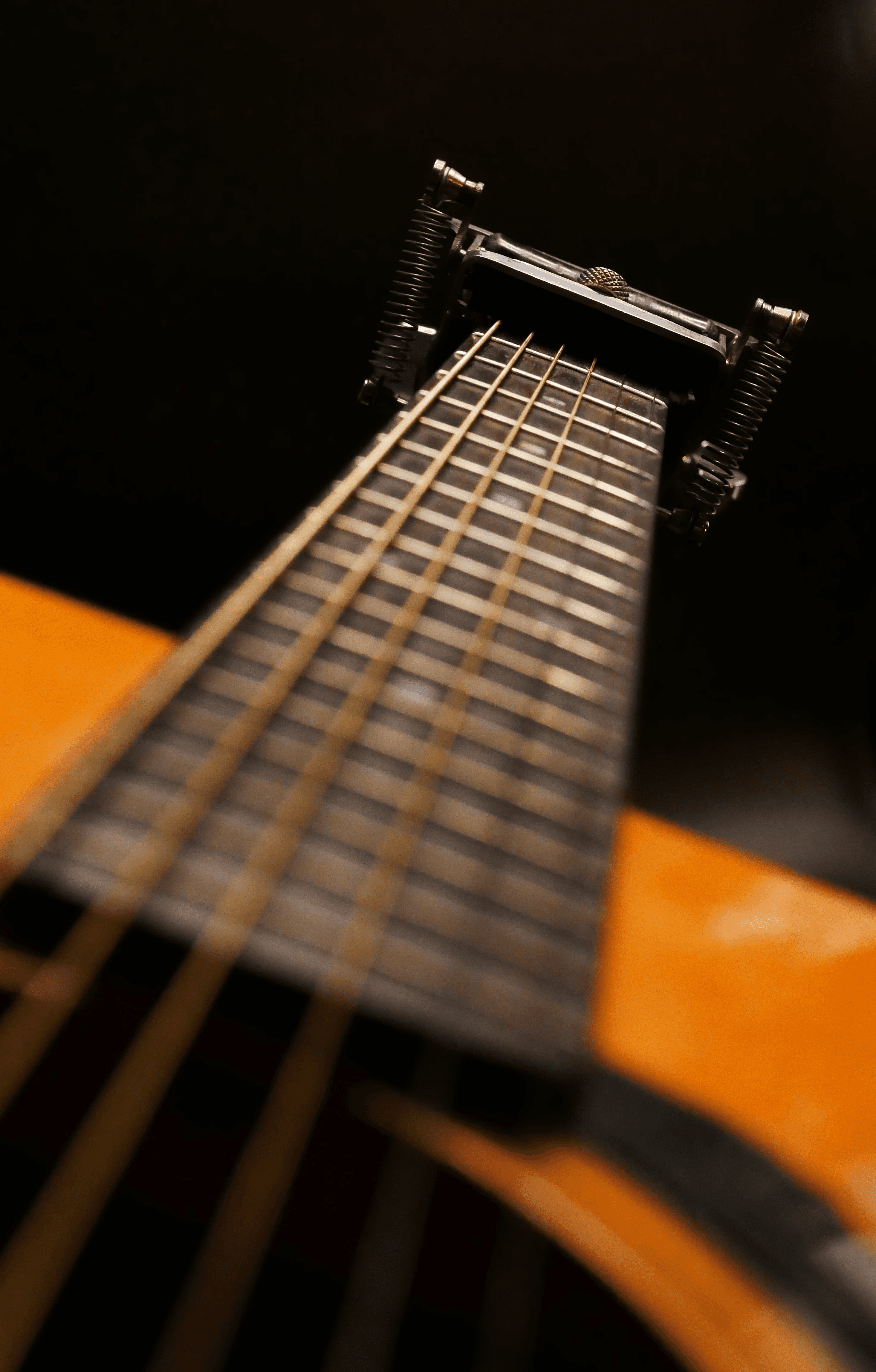
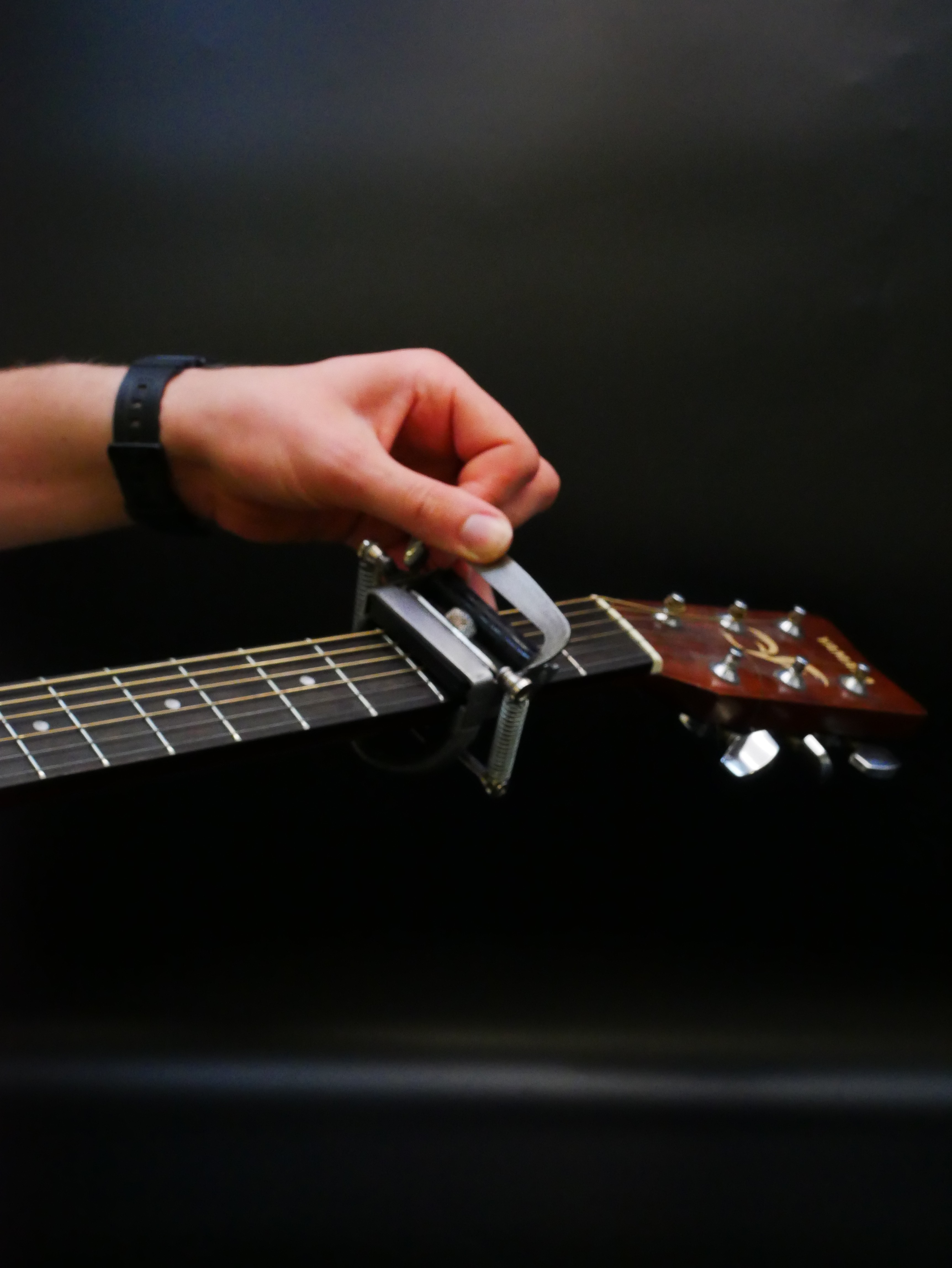
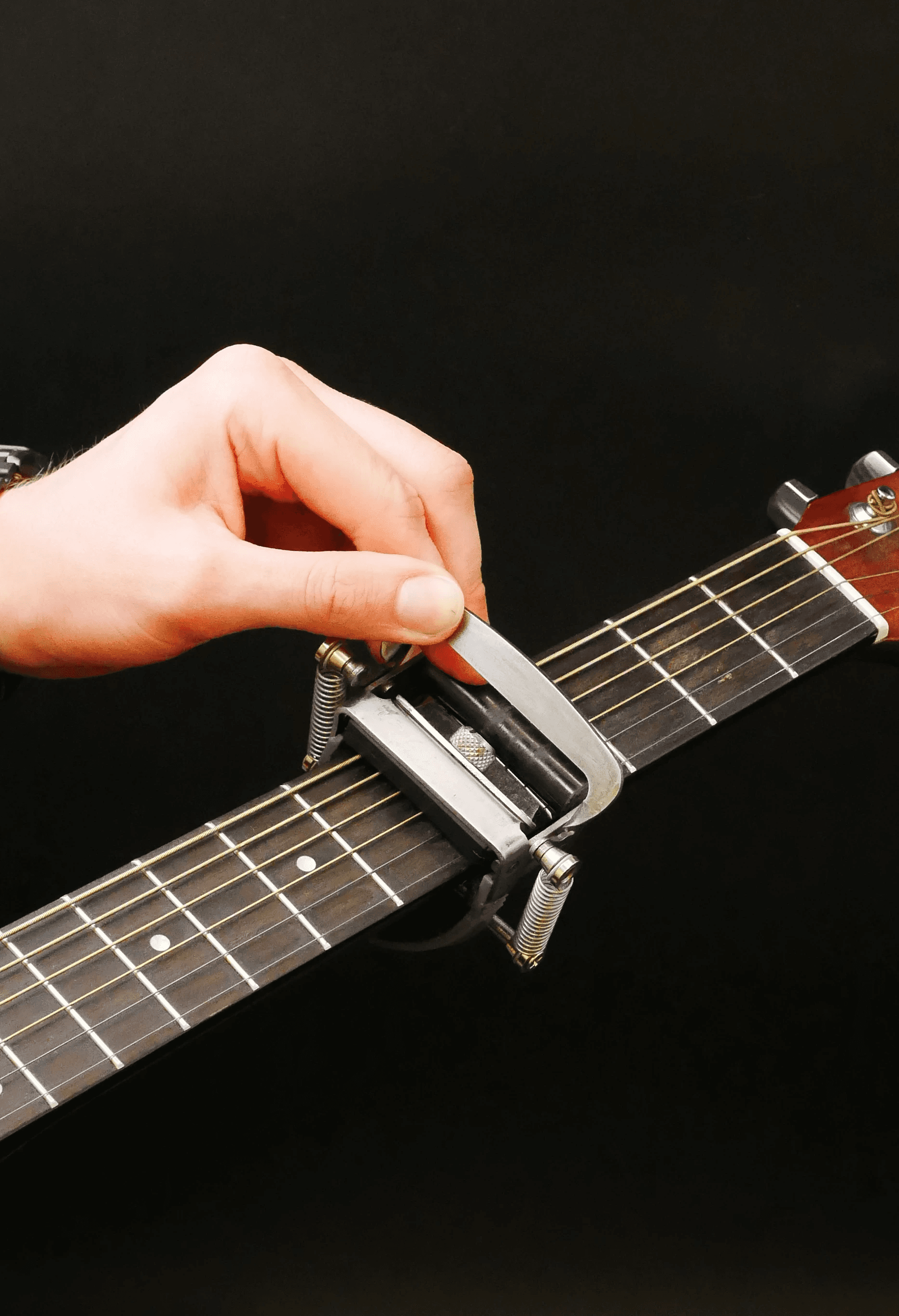
KeyGlide is designed to increase the speed at which a guitar player can move the capo (or clamp), enabling them to change the position of the ‘open strings’ mid-performance. It works using wheels and pads to slide and guide the device along the fretboard, releasing and applying pressure with the player's thumb.
KeyGlide was designed over a semester, a term for planning and research, and a term for prototyping. It forced students to prove themselves in all areas.


Process


Planning and goal-setting (specifications, aims & objectives) came first, which informed research into different products related to guitar playing and maximizing the use of the fretboard. This document includes the research and ideation sketches used in the development of KeyGlide.


The 365 Technique
An ideation technique in which six people collaborate on one another's projects, the solutions are low-fidelity and uninformed, but provide a fresh perspective.
SCAMPER
A structured way of exploring unexpected ideas, through forcing design via different perspectives.


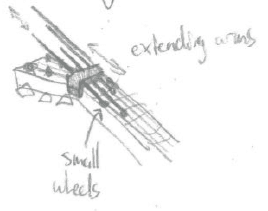

Three concepts emerged as worthy of bringing forward. This one with a levered mechanism is sprung against the strings to press on them. It appeared most feasible, useful, and interesting.


This video by YouTuber Mark Rober, where he creates the world's smallest Nerf blaster using compliant mechanisms, inspired the initial prototypes as a way to provide pressure to the strings.


The second prototype differs in basic principle. It uses an elastic band to press a capo bar to the strings, while also being capable of sliding. It was not considered viable at this time.
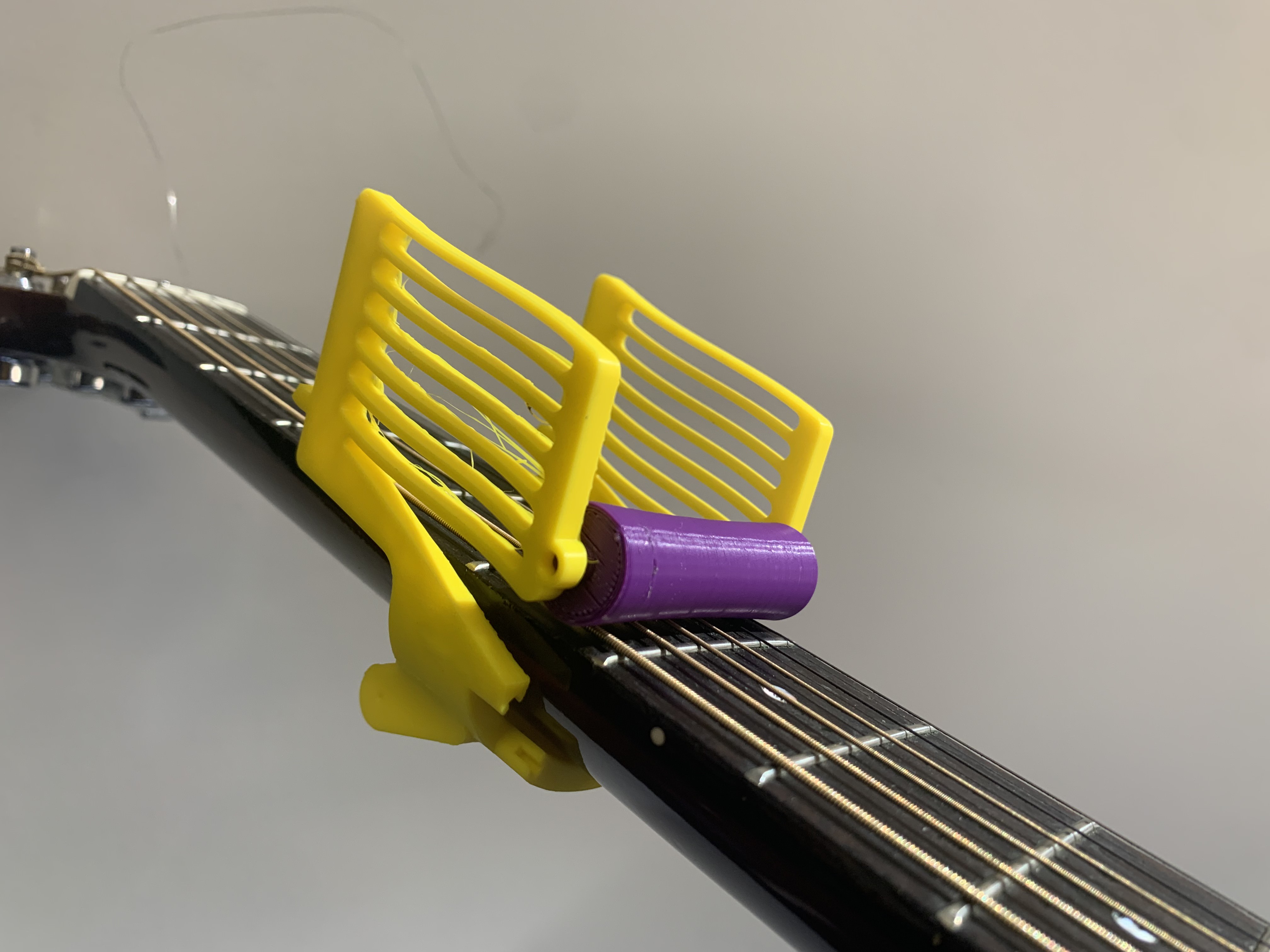


Here is the first reliably working prototype, with a levered spring mechanism, adjusted correctly, which was able to provide enough pressure to press all the strings at once.
Result


The result is a working prototype that looks and functions as designed. This prototype was created in a residential garage using waterjet-cut steel, fixings, cast synthetic rubber, and 3D-printed resin.

Reflection
Doing this project taught me most out of anything I'd done before it. It dropped me in the deep end, even though I had prepared as well as I could. I am pleased with the end product, but with hindsight, there is much I would change and adapt.
Most importantly, the design is trying to do too much, making it complicated. I became quite attached to the idea of lifting the capo off the strings and accessing the frets "behind" it. At the time, this seemed more important, although it was the primary cause of the design's complexity.

Without the complication, the capo could have been based on an elastic capo like the one shown above. Getting it to roll properly would have been tricky, but the result would have been far simpler.


Gallery